
DES-2T13 Online Practice Questions and Answers
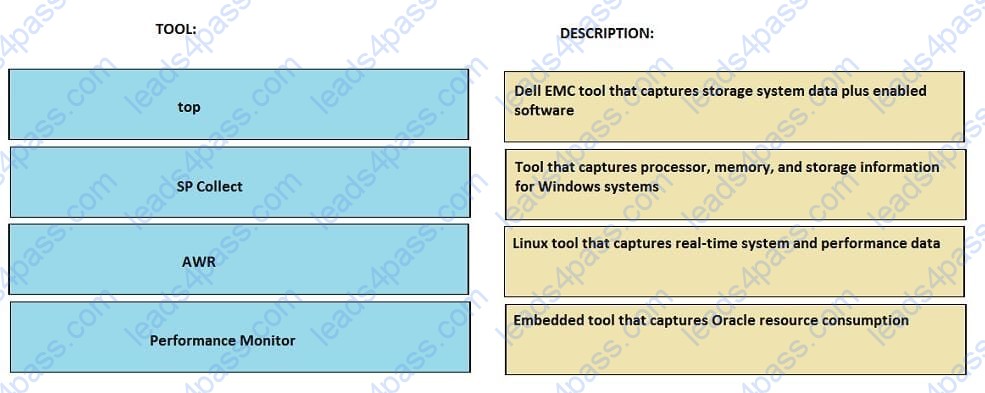
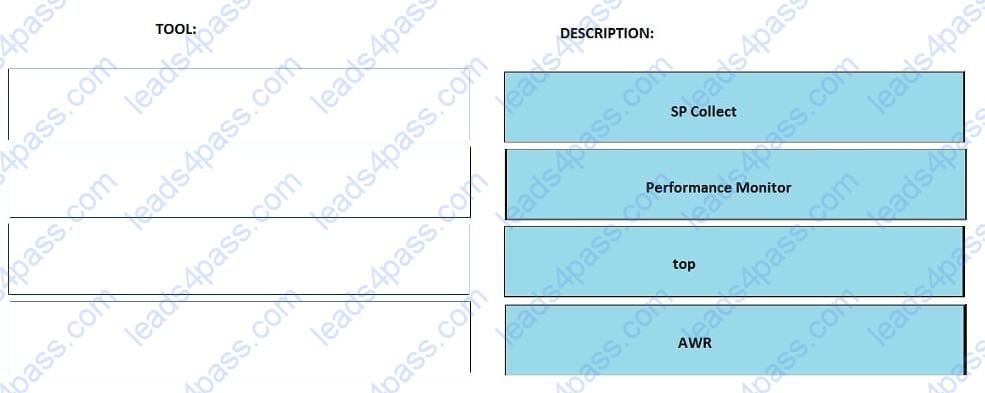
As a cloud architect you are working with an organization to choose between a DIY or packaged PaaS Solution.
What is a selection criterion that applies to DIY?
A. Has a higher cost of licensing and support
B. Is a more stable platform
C. Has built-in governance policies
D. Supports automated configuration
An organization wants to provide its developers the ability to deploy VMs. These VMs have software and libraries installed that are used to develop applications. Each VM will be configured with the same IP address and will be able to download application code from a central server. What will be included in the design to support these requirements?
A. VXLANs and an OS firewall
B. VXLANs and virtual firewall appliances
C. VLANs and virtual IDS appliances
D. VSANs and virtual IDS appliances
As a cloud architect, you are designing a CI solution to ensure that you isolate specific workloads for security. What should you design for?
A. High Availability
B. Fault Tolerance
C. Multi-tenancy
D. Redundancy
A cloud architect is designing a packaged PaaS Solution for an organization. One of the primary concerns of the organization is application portability. What consideration focuses on portability?
A. A technology must be chosen that enables portable PaaS architectures
B. Monitoring at the application level must capture and evaluate key metrics
C. A subscription-by-time cost model must be chosen to manage costs
D. A secure connector must be chosen to ensure secure API access to data
As a cloud architect designing a DIY PaaS Solution, you have concluded that using containers to support the target application is the best choice. What consideration supports that decision?
A. An application will run on multiple platforms with minor modification
B. The abstraction of the physical hardware limits vulnerability
C. Multiple operating systems can be supported in a single container
D. The container supports the required software stack
You are designing a cloud to support an Oracle OLTP environment. What is the recommended read/write ratio to use in this environment?
A. 2 to 1
B. 3 to 1
C. 4 to 1
D. 5 to 1
SPECIAL INSTRUCTIONS REMINDER
The remaining questions are associated with two cases. Each case has an introductory, descriptive passage (case text) that describes background information and requirements for a specific cloud based design. And each case has a set of
six related, randomized questions. You will need to read the case text in order to answer the related questions correctly.
Given that there are two cases with six scored questions each, the total number of case-based scored questions is 12.
When you display each questions you can easily review the related case text in a pop-up window by clicking on the "Case" icon (shown below)
Case 4
Refer to the exhibit.
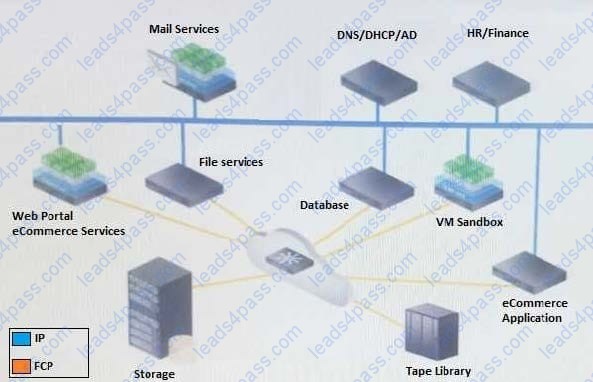
Your company is currently using a traditional SAN storage network. The server infrastructure is partially virtualized. There is a public cloud in place that is used to test development and application migration to cloud.
Business requirements:
Consolidate the network, storage, and compute resources Simplify network management and storage provisioning Maintain application performance
Need to share resources to reduce cost and improve efficiency Other considerations:
Monitoring of protection SLAs
All transactions must be logged for auditing review
Users are validated using internal credentials
Refer to Case 4.
You are designing a private cloud to use VLANs to support compute-to-compute connectivity. The IT team has added a requirement to simplify the configuration management within the infrastructure. What is a limitation related to VLANs for
this requirement?
A. VLANs require separate infrastructure and management traffic trunks
B. VLANs can only support up to 4094 virtual networks
C. Adding a new VLAN requires configuration changes throughput the stack
D. Converged infrastructure limits which NICs can separate network traffic types
SPECIAL INSTRUCTIONS REMINDER
The remaining questions are associated with two cases. Each case has an introductory, descriptive passage (case text) that describes background information and requirements for a specific cloud based design. And each case has a set of
six related, randomized questions. You will need to read the case text in order to answer the related questions correctly.
Given that there are two cases with six scored questions each, the total number of case-based scored questions is 12.
When you display each questions you can easily review the related case text in a pop-up window by clicking on the "Case" icon (shown below)
Case 4
Refer to the exhibit.
Your company is currently using a traditional SAN storage network. The server infrastructure is partially virtualized. There is a public cloud in place that is used to test development and application migration to cloud.
Business requirements:
Consolidate the network, storage, and compute resources Simplify network management and storage provisioning Maintain application performance
Need to share resources to reduce cost and improve efficiency Other considerations:
Monitoring of protection SLAs
All transactions must be logged for auditing review
Users are validated using internal credentials
Refer to Case 4.
You are designing the network components for a Do-It-Yourself private cloud solution. You want to restrict domain events and minimize traffic disruptions between nodes.
Which compute to storage connectivity solution provides this function?
A. VSAN
B. FC SAN
C. VLAN
D. VXLAN
What would you describe is a key characteristic of cloud platform as a Service (PaaS)?
A. Direct control over the underlying infrastructure
B. Cloud hosted integrated development environment
C. Home-grown programming environment
D. Cloud hosted, in house built tools





All rights are reserved by
leads4pass.com. Any changes, copy or trademarks abuse will be
regarded as infringement.
leads4pass.com will reserve the right to pursue accountability.
Copyright © 2004-
2026 leads4pass.com.