
AI-900 Online Practice Questions and Answers
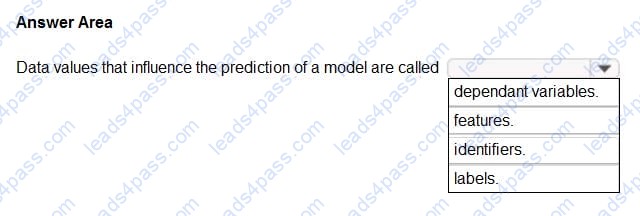
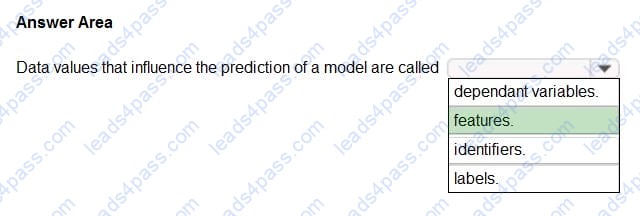
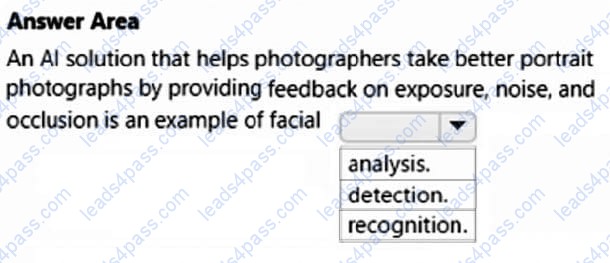
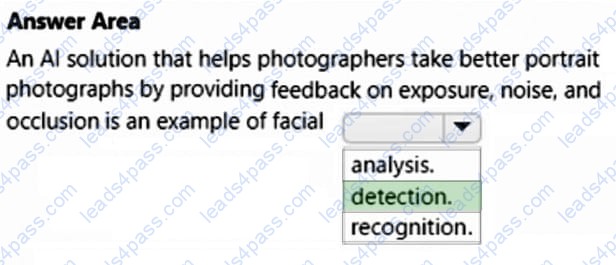
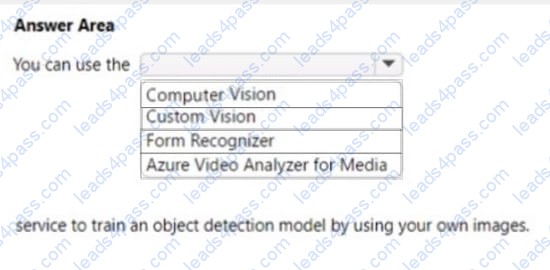
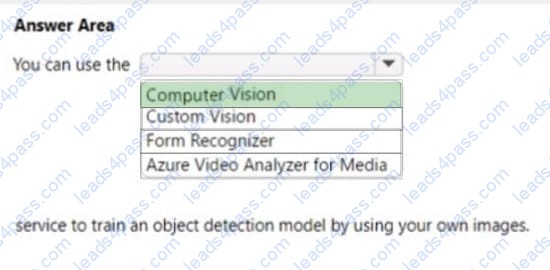
HOTSPOT
To complete the sentence, select the appropriate option in the answer area.
Hot Area:
You have an Al solution that provides users with the ability to control smart devices by using verbal commands.
Which two types of natural language processing (NLP) workloads does the solution use? Each correct answer presents part of the solution.
NOTE: Each correct selection is worth one point.
A. text-to-speech
B. translation
C. language modeling
D. key phrase extraction
E. speech-to-text
Which two languages can you use to write custom code for Azure Machine Learning designer? Each correct answer presents a complete solution. NOTE: Each correct selection is worth one point.
A. Python
B. R
C. C#
D. Scala
A historian can use ________ to digitize newspaper articles. Select the answer that correctly completes the sentence.
A. Object detection
B. Facial recognition
C. Image classification
D. Optical character recognition (OCR)
You have an Internet of Things (loT) device that monitors engine temperature.
The device generates an alert if the engine temperature deviates from expected norms.
Which type of Al workload does the device represent?
A. natural language processing (NLP)
B. computer vision
C. anomaly detection
D. knowledge mining
You have a security system that analyzes images from CCTV to provide authorized staff entry into restricted area. Which type of computer vision does the system use?
A. optical character recognition (OCR)
B. semantic segmentation
C. facial detection and facial recognition
D. image analysis
You have a solution that reads manuscripts in different languages and categorizes the manuscripts based on topic. Which types of natural language processing (NLP) workloads does the solution use?
A. speech recognition and entity recognition
B. speech recognition and language modeling
C. translation and key phrase extraction
D. translation and sentiment analysis
You need to identify street names based on street signs in photographs. Which type of computer vision should you use?
A. object detection
B. optical character recognition (OCR)
C. image classification
D. facial recognition





All rights are reserved by
leads4pass.com. Any changes, copy or trademarks abuse will be
regarded as infringement.
leads4pass.com will reserve the right to pursue accountability.
Copyright © 2004-
2026 leads4pass.com.