
98-367 Online Practice Questions and Answers
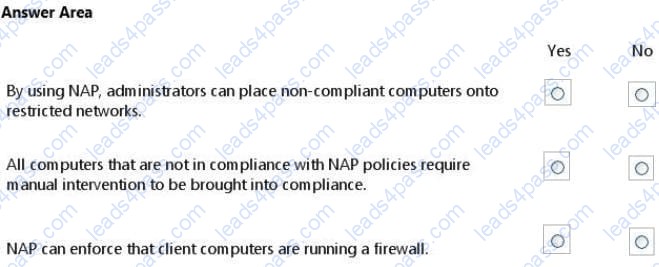
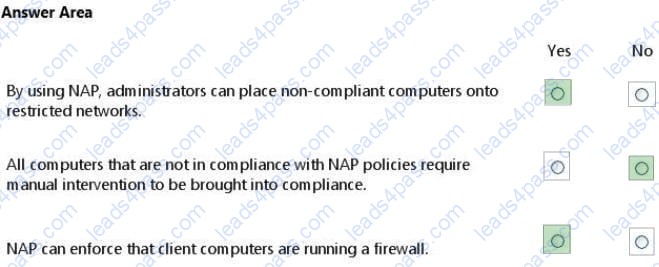
For each of the following statements, select Yes if the statement is true. Otherwise, select No. Each correct selection is worth one point.
Hot Area:
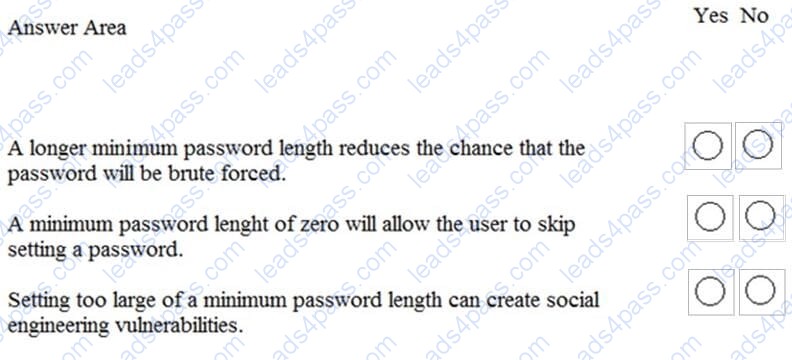
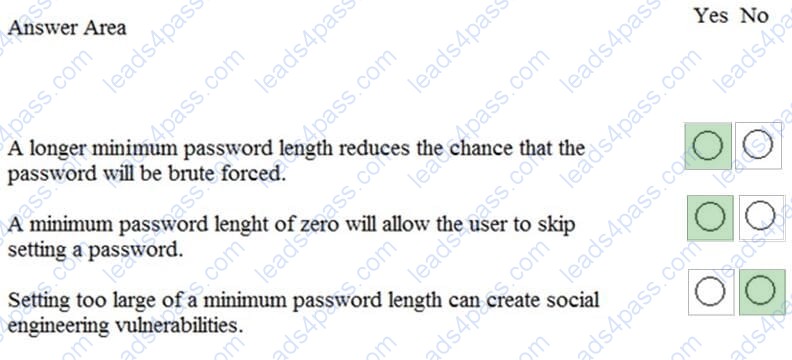
You are helping your classmates with their password settings.
Instructions: For each of the following statements, select Yes if the statement is true. Otherwise, select No.
NOTE: Each correct selection is worth one point.
Hot Area:
E-mail bombing attacks a specific entity by:
A. Redirecting all e-mail to another entity
B. Sending high volumes of e-mail
C. Tracing e-mail to the destination address
D. Triggering high levels of security alerts
You need to prevent unauthorized users from reading a specific file on a portable computer if the portable computer is stolen.
What should you implement?
A. File-level permissions
B. Advanced Encryption Standard (AES)
C. Folder-level permissions
D. Distributed File System (DFS)
E. BitLocker
Which of the following can be installed for ensuring that the domain is secure in the remote locations?
A. Read-Only domain controller (RODC)
B. Microsoft Baseline Security Analyzer
C. Windows Software Update Services
D. DNS dynamic update
Which of the following types of viruses protects itself from antivirus programs and is more difficult to trace?
A. Armored virus
B. MBR virus
C. Boot sector virus
D. Macro virus
Which of the following are the features of security level in the Restricted Sites zone
A. The protection against harmful content is provided.
B. The maximum safeguards are used.
C. Most of the features are disabled.
D. The default security level is low.
Which of the following tools traces all or specific activities of a user on a computer?
A. Task Manager
B. Event Viewer
C. Network Monitor
D. Keylogger
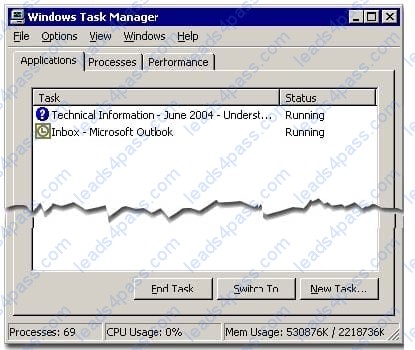
Which of the following is a physical address stored in the Network Interface card on your system or any other device residing on your network?
A. IP address
B. I/O address
C. MAC Address
D. Broadcast address
The process of creating a barrier between domain members and non-domain members by using IPsec policies is referred to as:
A. server filtering
B. domain filtering
C. domain isolation
D. server isolation





All rights are reserved by
leads4pass.com. Any changes, copy or trademarks abuse will be
regarded as infringement.
leads4pass.com will reserve the right to pursue accountability.
Copyright © 2004-
2026 leads4pass.com.